
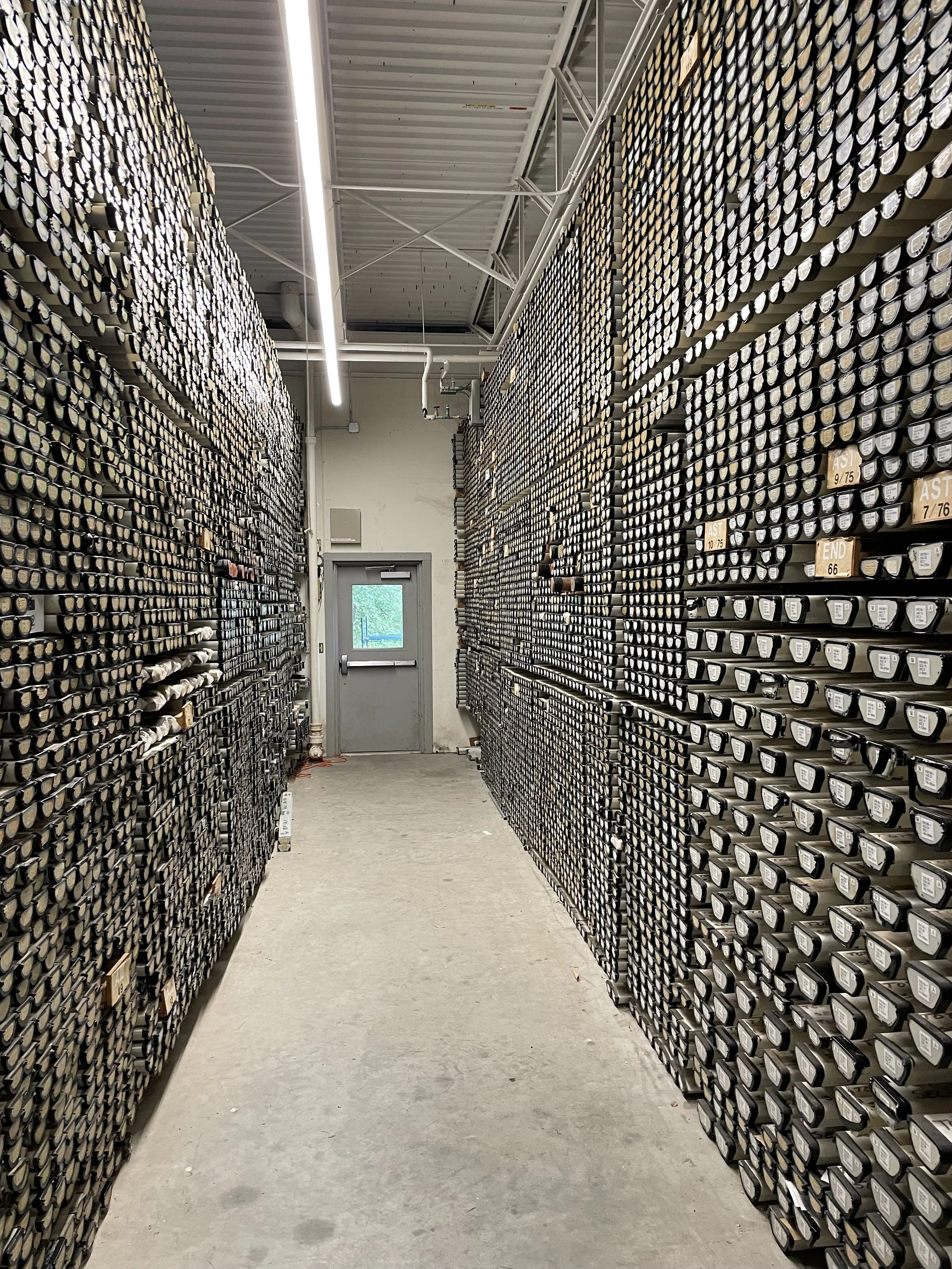
Borehole Sample Archive
Borehole Archive
Connecting the full column, from soil to bedrock.
Every borehole tells a continuous story, from the living soil at the surface, down through weathered material to the bedrock below. Too often, that story gets split up. Soil scientists often studies the top meter, geologists focus on the rock, hydrologists track the water moving between them, and engineers log what matters for construction. The samples that could connect these views often sit in storage or get thrown out when a project ends. Many are never seen outside the team that collected them.
The Soil2Bedrock Borehole Archive is being built to change that.
What we're building
We're working with drilling and borehole companies to collect, preserve and share core and sample material from across the soil-to-bedrock system. We'll bring these samples together in one place, along with their logs and site information, so researchers from different fields can study the same material.
The goal is a shared resource where a soil scientist, a geologist, a hydrologist, a microbiologist and a geotechnical engineer can all study the same borehole. Together, they can build a fuller picture of how the subsurface works as one connected system.
Have borehole samples? We'd like to hear from you.
We're looking for partners who have borehole cores, cuttings or other subsurface samples, especially material that captures the transition from soil to bedrock. You might be:
A drilling or geotechnical company with cores from completed projects
A consulting or environmental firm with samples you no longer need to keep
A government agency, university or research group with archived material
A landowner or organization holding samples from past site work
A scientist who studies this area
If you have samples you'd like to preserve, share or donate, please get in touch. We can talk through what you have and what information comes with it, such as logs, location, depth and collection date. Then we can work out together whether it fits the archive. In many cases, we may be able to accept samples directly.
Contact us about your samples →kmorel@stanford.edu
Coming soon
The archive is still being built. Over the coming months we'll share more about:
Which sample types we accept, and how to prepare and ship them
How samples and data will be catalogued and made searchable
How researchers can request access to samples
The companies and organizations contributing to the archive
Check back for updates!